The Rise of Political Influencers in India
Social media has changed the way politics works in India. Earlier, political influence came through rallies, newspapers, television debates, and party workers. Today, influence comes through Instagram reels, YouTube videos, Twitter trends, and viral clips.
The biggest question for India’s youth is simple:
Are we using social media, or are we being used by it?
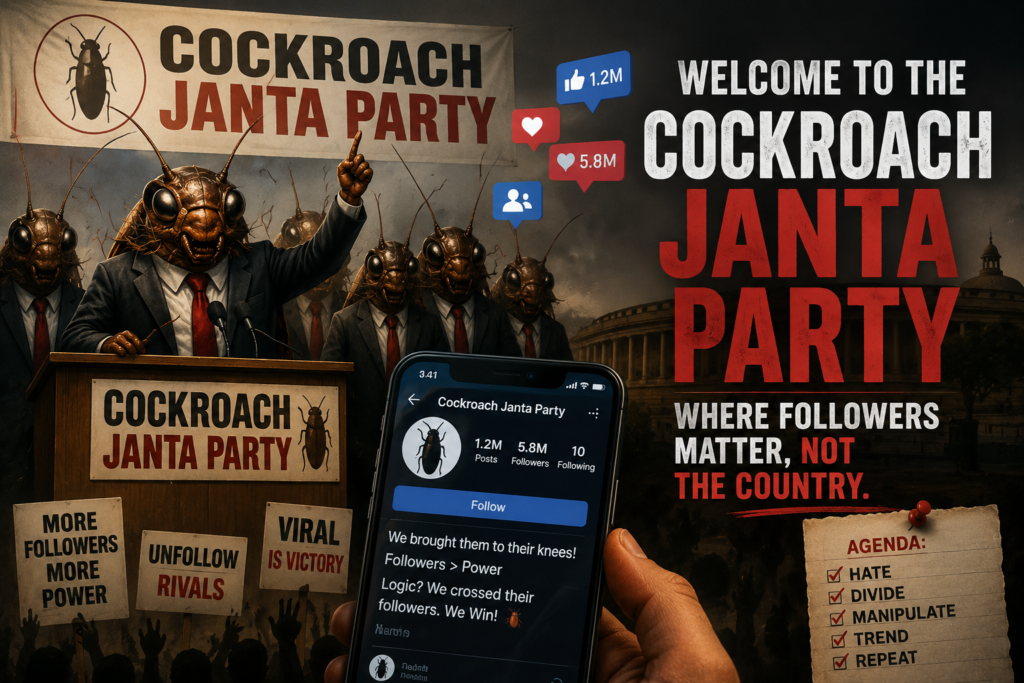
Recently, many online political creators and meme-based communities have started treating follower counts like election victories. One example often discussed online is the rise of groups like the so-called “Cockroach Janta Party (CJP),” whose supporters celebrate social media growth as if it directly means political success.
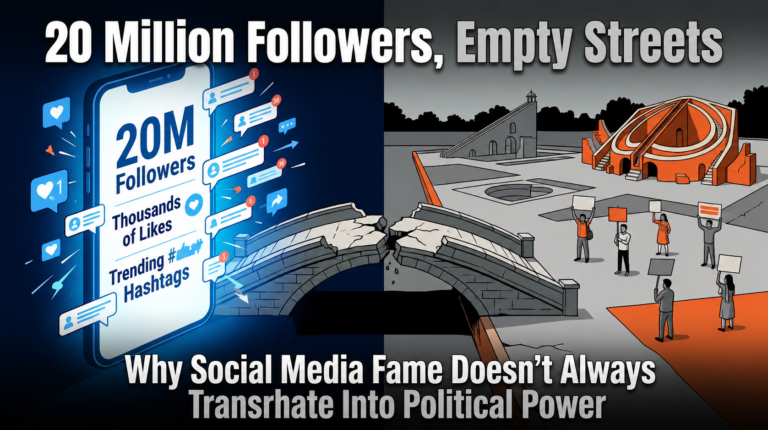
When some creators proudly claim that crossing the follower count of a national political party means they have “brought that party to its knees,” it raises an important concern. Is democracy now becoming a competition of Instagram numbers instead of policies, governance, and real public issues?
Follower Counts Are Not Real Change
A political movement is not built only on likes, shares, and memes. Real change happens when people talk about unemployment, education, corruption, inflation, examination scandals, women’s safety, and healthcare.
The criticism raised by many observers is that while students across India were demanding justice over issues like the NEET controversy, paper leaks, student suicides, and pressure on competitive exam aspirants, many influencers focused more on attacking political opponents than discussing solutions.
For example, instead of consistently demanding accountability from authorities or focusing deeply on student issues, much of the online debate shifted toward personality wars, follower comparisons, and emotional political branding.
This creates frustration among students who feel their struggles are being used for engagement rather than genuine reform.
The Problem With Extreme Online Politics
One of the most dangerous things about social media politics is extremism. Platforms reward outrage because outrage gets views.
The more aggressive, emotional, and divisive a video is, the more it spreads.
This affects both sides of the political spectrum. Instead of encouraging discussion, many creators encourage blind loyalty. People are told whom to follow, whom to unfollow, whom to hate, and whom to worship.
Young audiences slowly stop asking important questions like:
- What are the actual facts?
- Is this information verified?
- Is this creator biased?
- Are they solving problems or simply creating outrage?
When politics becomes entertainment, citizens become audiences instead of responsible participants in democracy.
The Left Wing Perspective
From a left-wing perspective, social media creators who criticize the government are often seen as necessary voices in a democracy. Supporters argue that independent creators expose government failures, corruption, exam scandals, unemployment, and misuse of power that mainstream media may ignore.
Many left-leaning audiences believe political influencers help keep governments accountable and encourage youth participation in politics. They also argue that questioning authority is healthy for democracy.
However, critics within the same space admit that excessive negativity and constant anti-government narratives can sometimes turn activism into online propaganda.
The Right Wing Perspective
From a right-wing perspective, many believe that certain influencers and political communities are less interested in improving the country and more focused on removing a particular political party from power.
Supporters of this view argue that some online creators selectively highlight issues only when it benefits their political narrative. They believe nationalism, stability, and development often get ignored while outrage-driven content is promoted for views and followers.
Many right-wing voices also criticize the growing “influencer culture” where creators are treated like unquestionable heroes instead of being challenged on facts and accountability.
Why Youth Must Think Independently
India has one of the youngest populations in the world. That means social media algorithms now have enormous influence over public opinion.
The real danger is not one political party or one influencer. The real danger is losing the ability to think independently.
Young people should not blindly trust politicians, influencers, YouTubers, or viral pages from any ideology. Whether left wing, right wing, or centrist, every voice should be questioned.
Democracy survives when citizens think critically, not when they become online fan armies.
About the Author