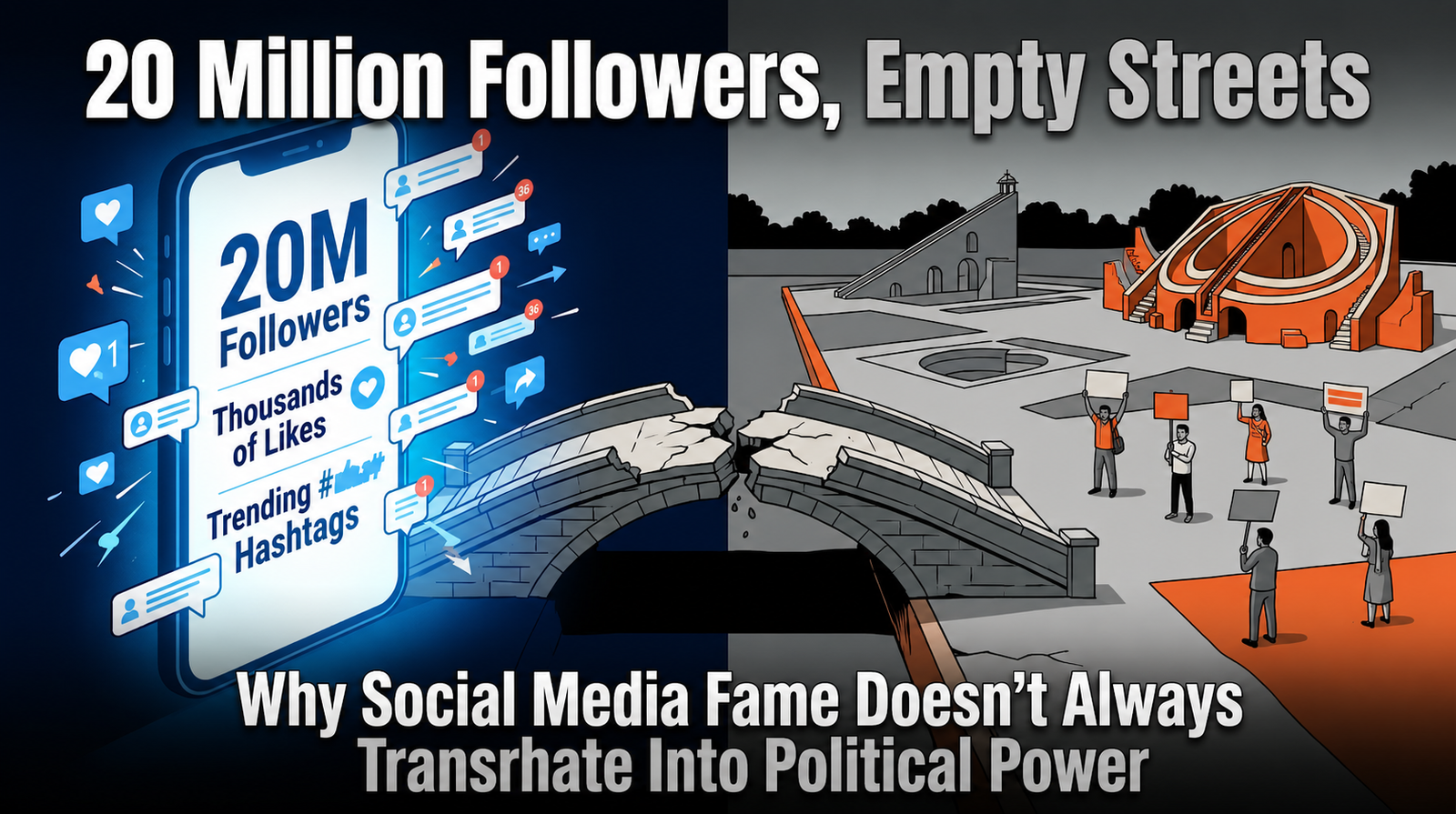
The Cockroach Janata Party (CJP) built an impressive online presence, attracting nearly 20 million followers and generating significant buzz across social media platforms. However, its recent protest at Jantar Mantar revealed the limitations of digital popularity. Despite the massive online support, the turnout on the ground fell far short of expectations, serving as a reminder that followers, likes, and shares do not automatically convert into real-world political participation.
No one can question the intentions of those who attended the protest. They exercised their democratic right to voice their concerns, and the event took place peacefully. Yet the episode highlights an important reality of modern politics: creating a trending movement online is far easier than building a sustained grassroots campaign. Social media can spark conversations and attract attention, but lasting political influence still depends on organization, commitment, and people willing to show up when it matters most.
From Hashtags to History: Why the Anna Hazare Movement Changed India
To understand why the CJP’s online popularity failed to translate into a mass movement, it’s worth revisiting the Anna Hazare anti-corruption campaign, one of the most influential public mobilizations in modern Indian politics. Unlike today’s social media-driven activism, this movement was built on credibility, sacrifice, and years of groundwork.
The Face of the Movement: Anna Hazare carried the moral authority of decades of social work and rural development in Maharashtra. His reputation gave the campaign legitimacy that resonated far beyond the internet.
The Architect: Arvind Kejriwal brought strategy, organization, and political acumen. Alongside a team of educated professionals, he transformed public anger over corruption into a structured nationwide movement.
What made the campaign powerful wasn’t just messaging but visible commitment. Many activists left stable careers and dedicated themselves fully to the cause, creating a sense of trust and urgency among ordinary citizens. The movement generated such momentum that it shook the political establishment and pushed the then-ruling Congress government onto the defensive.
Recognizing the moment, Kejriwal converted the agitation into a political project, launching the Aam Aadmi Party in 2012 under the promise of an alternative political culture. Whether one agrees with his later political choices or not, the rise of AAP was not built on hashtags alone. It required relentless organization, strategic alliances, and the ability to turn public sentiment into a real political force.
When Likes Meet Reality: The Limits of Digital Influence
CJP founder Abhijit Dipke, a former AAP member and IT professional, mastered the art of capturing attention online through humour, satire, and relatable content. In a matter of days, he built a massive digital following and created the impression of a growing political force. However, social media popularity and political strength are rarely the same thing.
There is a significant difference between leading a viral online community and building a movement that can mobilize people on the ground.
Dipke focused on emotionally charged issues such as exam paper leaks and unemployment, topics that naturally trigger strong reactions across social media. But online outrage is often temporary. Many of his supporters were willing to like, share, and comment, yet far fewer were prepared to leave their homes and participate in a physical protest.
That explains why a platform claiming nearly 20 million followers struggled to convert even a tiny fraction of that support into real-world attendance. The numbers looked impressive online, but the streets told a different story.
The organizers also appeared to be banking on a dramatic narrative. Rather than relying solely on digital communication, they chose a highly visible approach to obtaining protest permissions. Some believed that any confrontation with authorities could have generated additional momentum. Instead, permission was granted without major obstacles, removing the sense of drama and leaving the movement without the spark it may have been counting on.
Beyond Memes and Hashtags: The Reality of Political Change
The CJP’s appeal is built largely on satire, humour, and clever social media content. While that may attract millions of followers online, turning jokes into a serious political movement is a far greater challenge. Issues like unemployment and paper leaks resonate with young Indians, but public frustration alone doesn’t automatically translate into a mass uprising.
History shows that political success requires more than viral popularity. Movements that leave a lasting impact are built through leadership, organization, and sustained public engagement. Even respected voices such as Sonam Wangchuk can help bring attention to important issues, but awareness is only the first step.
Demonstrations may create headlines, and social media may create trends, but real political change is rarely driven by hashtags alone. It is built patiently on the ground through credibility, commitment, and the ability to inspire people to act beyond the digital world.
About the Author