Third Fuel Price Hike in Just 10 Days Leaves Common People Worried
Indian consumers are once again facing the heat of rising fuel prices as petrol and diesel rates have been increased for the third time within just 10 days. The repeated hikes are putting extra pressure on middle-class families, office-goers, transport workers, and small businesses already struggling with rising daily expenses.
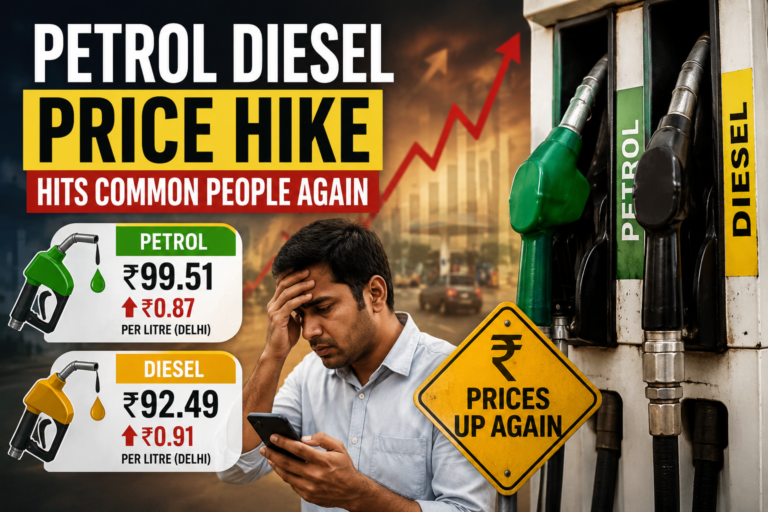
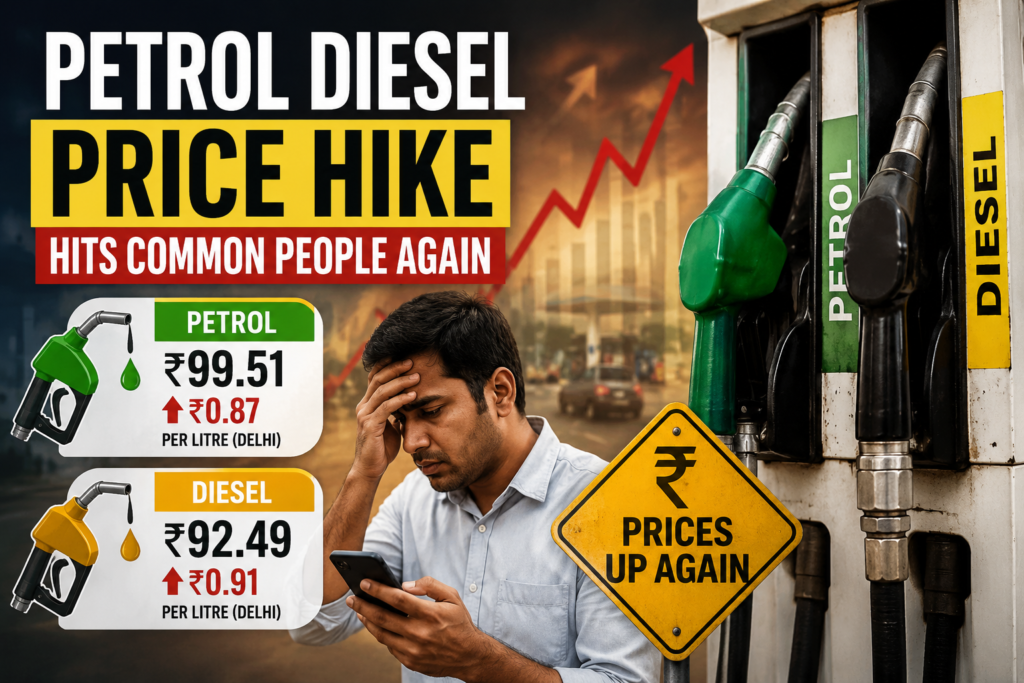
With this latest increase, fuel prices have jumped by almost ₹5 per litre since May 15. In Delhi, petrol prices rose by 87 paise, reaching ₹99.51 per litre, while diesel became costlier by 91 paise, now priced at ₹92.49 per litre.
Earlier, oil companies had already raised prices by ₹3 per litre on May 15, followed by another 90-paise hike on May 19. The continuous increase is now affecting transportation costs, food prices, and household budgets across the country.
What’s Driving the Sudden Fuel Price Surge Across India?
The continuous rise in petrol and diesel prices is mainly linked to increasing global crude oil costs and growing pressure on India’s fuel import system. As tensions continue to rise in West Asia, international energy markets have become unstable, forcing state-owned oil companies to pass the extra burden directly onto consumers.
Apart from global issues, several domestic and economic factors are also pushing fuel prices higher:
- Rising crude oil prices in the international market
- Weakening value of the Indian rupee against the dollar
- Higher refining and transportation costs
- Increased fuel consumption during the harvesting and sowing season
Experts say diesel demand has especially gone up in recent weeks due to large-scale agricultural activities such as wheat harvesting and paddy sowing in many parts of the country. With transportation and farming heavily dependent on diesel, the impact.
“How Will Common People Survive?” Fuel Price Hike Sparks Public Anger
The continuous increase in petrol and diesel prices has left many citizens frustrated and worried about managing their daily expenses. From office workers to transport drivers, people across cities say the rising fuel costs are becoming impossible to handle while incomes remain largely unchanged.
In Delhi, several daily commuters expressed anger over the growing cost of travel. One resident said that spending nearly ₹200 every day on petrol is a huge burden for families earning only ₹15,000–₹16,000 a month. Many middle-class households now fear that basic monthly budgeting is slipping out of control.
People also questioned the government’s push towards electric vehicles and public transport, saying electric cars are still far too expensive for ordinary families. For many citizens, shifting away from petrol and diesel is simply not affordable right now.
Taxi drivers, auto drivers, and commercial vehicle operators say they are among the worst affected by the repeated hikes. With CNG prices also rising and transport fares remaining unchanged, many drivers claim they are struggling to earn enough for survival. Several reported frequent arguments with passengers over increased travel charges, adding more pressure to an already difficult situation.
PM Modi Urges Citizens to Save Fuel, But Many Say the Reality Is Different
Amid the continuous rise in petrol and diesel prices, Prime Minister Narendra Modi recently appealed to citizens to reduce fuel consumption by using public transport, carpooling, and work-from-home options wherever possible.
The government believes that lowering fuel usage can help reduce India’s massive oil import expenses and ease pressure on the country’s foreign exchange reserves. Officials say collective efforts to save fuel could also help stabilise the economy during a time of rising global energy prices.
However, many citizens feel that these suggestions are difficult to follow in real life. Daily commuters, office workers, and people living in smaller towns or rural areas say they often have no reliable public transport available. For millions of Indians who depend on personal vehicles for work and daily travel, reducing fuel usage is easier said than done.
No Nationwide Fuel Crisis, Says Indian Oil Corporation Amid Growing Panic
As rumours about fuel shortages spread in several areas, Indian Oil Corporation has assured citizens that there is no nationwide shortage of petrol or diesel. The company clarified that the supply problems seen at a few petrol pumps were only temporary and limited to specific local areas.
According to IOC, the sudden rush at public sector fuel stations happened because of rising seasonal diesel demand, increased bulk purchases by institutions, and customers preferring government-run pumps over private outlets where fuel prices were reportedly higher.
The company also shared fresh sales data showing a sharp jump in fuel consumption across the country. Between May 1 and May 22, petrol sales increased by 14%, while diesel sales recorded a massive 18% rise compared to the same period last year.
Rising Fuel Prices Deepen Inflation Fears Across the Country
Even though fuel supply remains stable, the continuous increase in petrol and diesel prices is creating serious anxiety among ordinary citizens. Since fuel prices directly impact transportation, food delivery, farming, and everyday household expenses, many people fear that the cost of living could rise even further in the coming weeks.
Middle-class families, daily wage workers, and small business owners say the repeated hikes are slowly damaging monthly budgets and reducing savings. With inflation already affecting essential goods, citizens are now demanding stronger government intervention and better regulation of fuel prices to protect lower and middle-income households from growing financial pressure.
About the Author