In today’s digital age, a politician’s online presence says a lot about their political journey. Recently, Raghav Chadha has come under scrutiny for allegedly deleting a large number of his social media posts. This has sparked debate about whether this is a strategic image makeover or something more concerning.
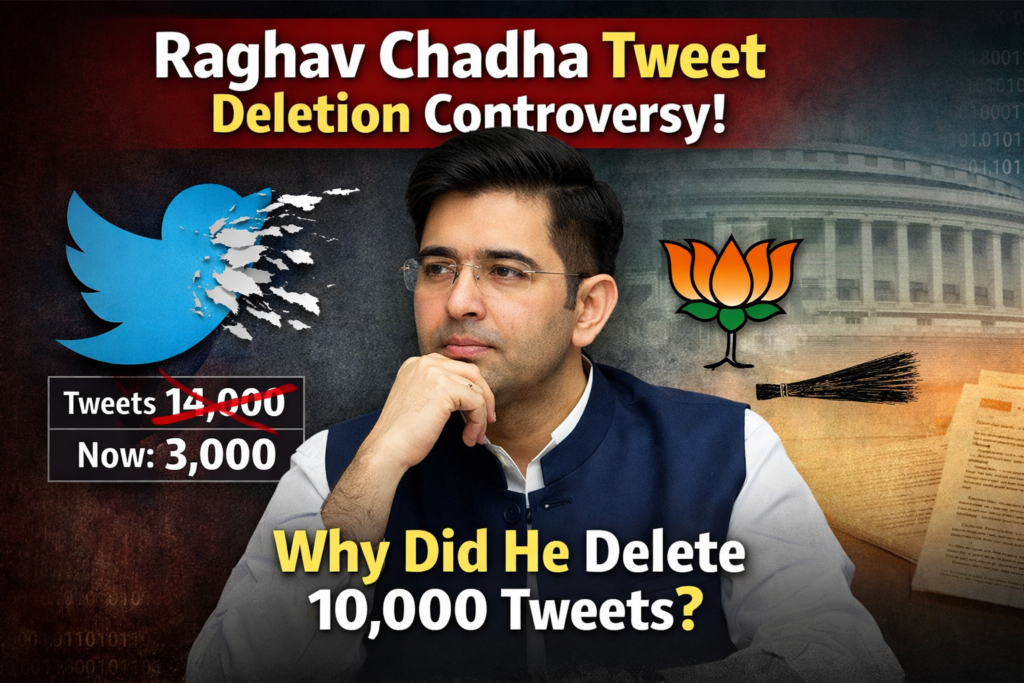
The Digital Clean-Up
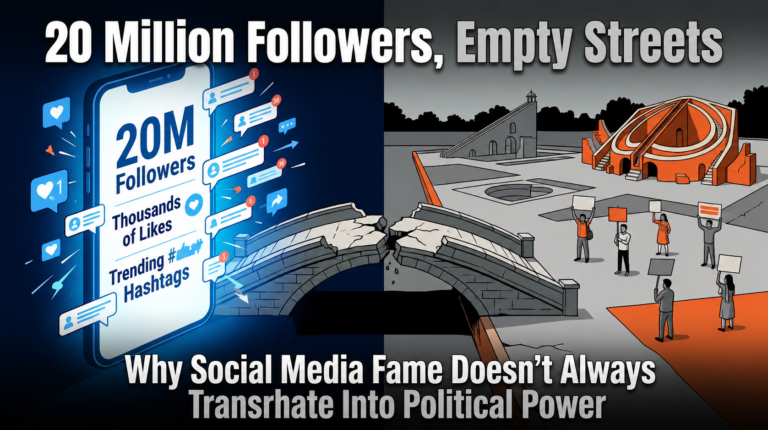
Reports suggest that Chadha’s Twitter activity has dropped sharply. From around 14,000 tweets, only about 3,000 remain. That means nearly 10,000 posts were deleted within just a few days. Many observers claim that tweets criticizing Bharatiya Janata Party and Narendra Modi have disappeared.
This kind of large-scale deletion doesn’t look random. It points towards a calculated move, possibly managed by a professional PR team. In politics, controlling your narrative is everything, and social media is the easiest place to start.
Changing Political Equations
What makes this situation more interesting is the timing. Chadha, a key member of the Aam Aadmi Party, has often been seen as close to Arvind Kejriwal. However, some critics believe these actions hint at internal shifts or ambitions beyond the party.
There are also claims that posts connected to statements involving Sonia Gandhi and other opposition leaders have been removed. If true, it raises questions about whether Chadha is trying to reposition himself politically.
Performance as an MP
Apart from social media, his performance as a Rajya Sabha MP from Punjab is also being questioned. Reports suggest that out of ₹18.8 crore allocated for development work since 2025, only about ₹3 crore has been utilized. That leaves a significant amount unspent.
Even more concerning is the lack of visible proof for completed projects. In an era where transparency matters, the absence of documentation only adds to public doubt.
Controversies and Allegations
Chadha’s name has also reportedly surfaced in discussions related to investigations by agencies like the Enforcement Directorate and the Central Bureau of Investigation in connection with the liquor policy case. While no conclusions should be drawn without due process, such mentions inevitably impact public perception.
The Bigger Picture
At the same time, everyday citizens are dealing with real issues—rising costs, job losses, and economic uncertainty. For many, these political maneuvers feel disconnected from ground realities.
When leaders appear more focused on managing their image than addressing public concerns, it creates frustration. People expect accountability, not just strategy.
Final Thoughts
Politics is a long game. Image management, alliances, and public perception all play a role. But trust is built through consistent action, not just curated timelines.
It’s still too early to draw final conclusions about Raghav Chadha’s intentions. However, one thing is clear—digital footprints may be erased, but public memory is much harder to manage.
About the Author