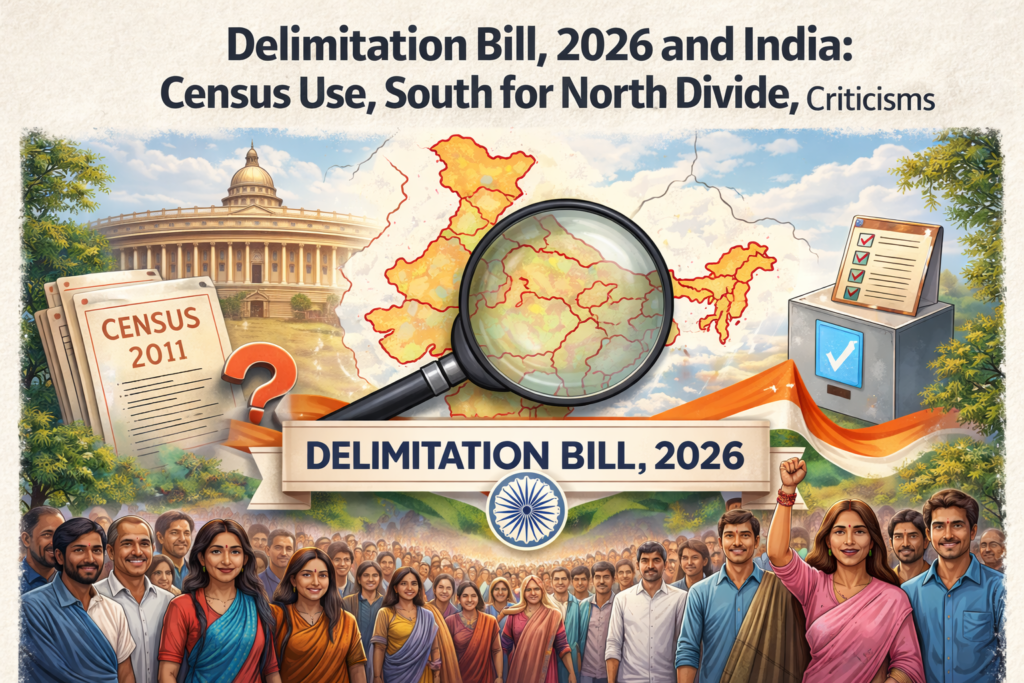
India stands at a crucial political crossroads. The Delimitation Bill, 2026, tabled in the Lok Sabha on 16 April 2026, aims to redraw electoral boundaries and reshape representation. While it promises fairer seat distribution and a boost for women’s representation, it has ignited sharp debate over outdated census data and a deepening North–South divide.
What the Bill Aims to Fix
The Bill pushes for a full reshaping of Lok Sabha and State Assembly seats based on population, along with fresh constituency boundaries to match changing demographics. It also replaces the Delimitation Act, 2002 with a new framework. At its core, delimitation is about equal representation—but the real question is: which population data should decide it?
The Census Dilemma: Stuck in 2011
One of the biggest flashpoints is the reliance on 2011 Census data. With no fresh census, the Bill risks reshaping representation using numbers that no longer reflect reality. Migration, urban growth, and shifting birth rates have changed India’s population map—but the data hasn’t caught up.
This raises a deeper issue. Delimitation was once frozen to reward population control. Now, sticking to old data delays real representation, while updating it could trigger major political shifts. It’s a tightrope between accuracy and political fallout.
What the Bill Wants to Deliver
It reshapes seats in Parliament and State Assemblies based on population, redraws constituencies for better balance and practicality, and brings in one-third reservation for women—including those from SC and ST communities. A move that could shift the gender balance in Indian politics.
Who Calls the Shots: Delimitation Commission
An independent Delimitation Commission will run the entire exercise, led by a Supreme Court judge and supported by members from the Election Commission and State bodies.
It holds sweeping powers—deciding seat allocation, reservations, and constituency boundaries. Once its orders are published, they carry the force of law and can’t be challenged in court.
North vs South: The Big Faultline
This Bill has sparked a sharp regional debate. If seats are redrawn purely on population, northern states like Uttar Pradesh and Bihar could gain more representation due to higher population growth.
Meanwhile, southern states like Tamil Nadu and Kerala may see their share shrink after years of controlling population growth.
That’s the core concern—southern states argue they’re being penalised for good governance, while others benefit despite slower progress in population control.
Key Highlights of the Bill
The Bill pushes for tighter, well-defined constituencies—geographically compact and aligned with administrative boundaries, with each Assembly seat falling within a Parliamentary one.
It also sets clear rules for reservations. Seats for SCs, STs, and women will be based on population, with women’s reservation rotating across constituencies to keep it fair over time.
Where the Bill Faces Heat
The Bill has drawn sharp criticism on multiple fronts. The reliance on 2011 Census data feels outdated and out of touch with today’s realities. There’s also concern that a population-based redraw could tilt power toward certain regions, deepening regional imbalances.
Another big worry is the lack of judicial review—once the Commission decides, there’s no legal challenge. Critics say that’s too much unchecked power. The rotating system for women’s reservation has also raised doubts, as it may disrupt long-term political growth in specific constituencies.
Why This Bill Is a Big Deal
The Delimitation Bill, 2026 isn’t just a legal tweak—it reshapes political power, regional balance, and the idea of fair representation.
It aims to fix seat imbalances and bring more women into politics. But it also risks fuelling regional tensions and leaning on outdated data.
In the end, it’s all about getting the balance right. Done poorly, it could deepen divides. Done well, it could make India’s democracy more fair and inclusive.
About the Author