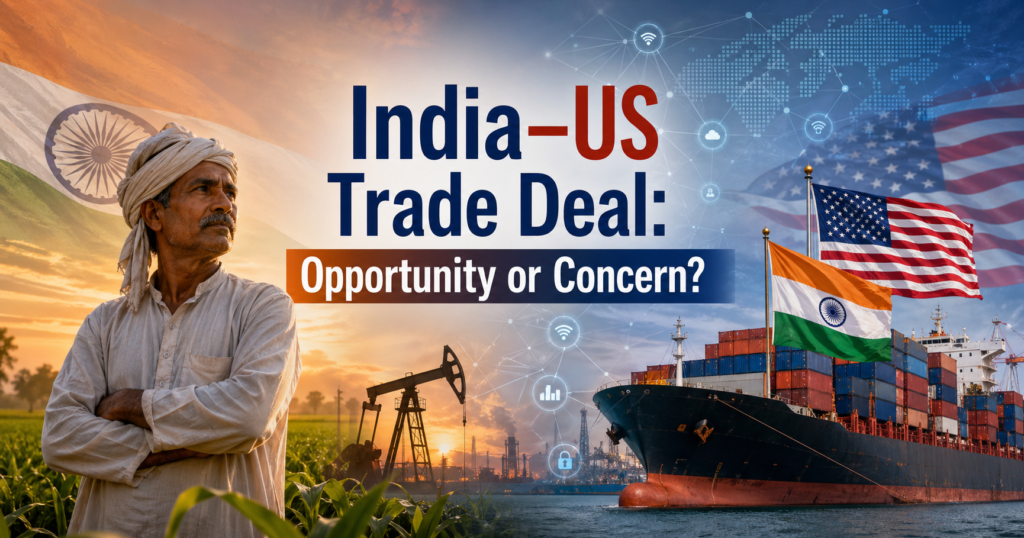
In recent months, India’s global trade strategy has come under sharp focus, especially with talks around agreements linked to leaders like Narendra Modi and Donald Trump. For some, these deals signal India’s rising presence in the global economy and new opportunities for growth. For others, they raise serious concerns about long-term consequences—ranging from the impact on domestic industries and farmers to deeper questions about economic independence and policy control.
Zero Tariffs and the Impact on Indian Farmers
One of the major points of discussion is the reported agreement on reducing or eliminating tariffs on certain imported American agricultural products.
Earlier, tariffs were imposed to ensure that foreign crops did not undercut Indian farmers by being significantly cheaper. Critics worry that if subsidized American agricultural goods enter the Indian market at lower prices, small and marginal farmers in India may struggle to compete.
The concern is simple:
- The US government provides heavy subsidies to its farmers.
- Indian farmers receive comparatively limited financial support.
- A price imbalance could hurt local agricultural income.
Supporters of the deal argue that trade liberalization can lower consumer prices and improve efficiency. However, the real test will be how well Indian farmers are protected during this transition.
Domestic Economy at Crossroads: Growth Boost or Hidden Strain?
A key concern in the India–US trade discussions is the possible surge in imports from the United States. If India ramps up purchases of machinery, fuel, or agricultural products, it could mean a heavier outflow of foreign currency—putting added pressure on the rupee and testing the country’s economic balance over time.
Energy ties add another layer to this debate. India has long relied on a diverse mix of global suppliers to keep fuel costs in check. Any direct or indirect constraints on this flexibility could limit options and drive prices upward. And when fuel becomes expensive, the impact doesn’t stay confined to policy papers—it reaches everyday life, raising transport costs and pushing up the overall cost of living.
Energy Security and Oil Imports
Energy independence is another sensitive topic. Reports suggest that India may align more closely with US energy exports.
In the past, India has sourced discounted crude oil from multiple countries to manage fuel prices. If geopolitical conditions or trade conditions limit sourcing flexibility, fuel prices could rise. Higher fuel costs often lead to inflation in transportation and essential goods.
Energy diversification has always been key to India’s strategy. Observers will closely watch whether this flexibility remains intact.
Data Privacy and Digital Sovereignty
Perhaps the most serious concern relates to data governance. Some critics argue that trade agreements involving digital trade may allow greater cross-border data flow.
If not carefully regulated, this could raise questions about:
- Protection of personal financial data
- Medical records
- Digital activity
Data protection laws and regulatory safeguards will play a crucial role in ensuring that Indian citizens’ privacy remains secure.
Political and Public Accountability
Trade agreements aren’t just economic documents—they’re deeply shaped by politics, global pressures, and strategic interests. Their complexity often leaves room for different interpretations, where allegations, political narratives, and public opinion start playing a big role. Today’s younger and more aware citizens aren’t just passive observers—they’re actively questioning what these deals truly mean for the country.
In a strong democracy, that questioning matters. It’s not about targeting individuals or governments, but about demanding clarity, accountability, and transparency. At the end of the day, the real test of any agreement is simple: does it genuinely protect and serve the nation’s long-term interests?
Beyond the Deal: What’s Really at Stake for India’s Future?
Trade agreements are rarely straightforward—they’re built on trade-offs, where economic concessions are often exchanged for gains in areas like defense, technology, or geopolitical influence. What looks like a simple deal on paper usually carries deeper strategic intent beneath the surface.
That’s why criticism matters—but it needs to be grounded in facts, transparency, and a clear view of long-term outcomes. People deserve to know how policymakers plan to protect farmers, keep the economy stable, and safeguard digital data in an increasingly interconnected world.
In the end, it’s informed citizens—especially young voters and working professionals—who will drive the conversation forward. Through awareness, research, and meaningful debate, they hold the power to shape how such decisions impact the country’s future.
About the Author