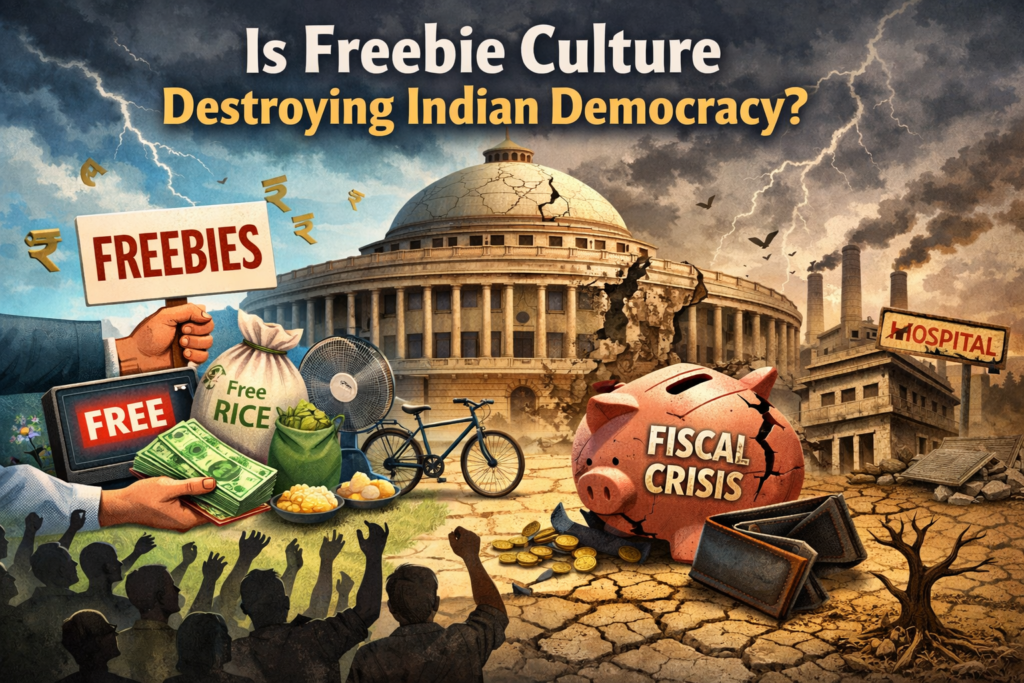
Every election season in India feels like déjà vu. Instead of real debates on jobs, development, or governance, the spotlight shifts to a different kind of competition—who can offer more freebies. From free electricity and water to bus rides, laptops, and even televisions, political parties roll out promises like festival offers. It grabs attention, no doubt. But it also raises a serious question: are these giveaways genuinely helping people, or quietly weakening the very foundation of our democracy?
Freebies Decoded: Welfare Support or Vote-Winning Shortcut?
So, what do we really mean by “freebies”? According to the Reserve Bank of India, these are benefits provided by the government at no cost to the public. But here’s where things get interesting—not everything given for free is the same.
There’s a clear line between genuine welfare and political giveaways. Schemes like MGNREGA, the Public Distribution System, and mid-day meals are built with a long-term purpose. They aim to fight poverty, improve lives, and uphold basic rights promised in the Constitution.
Freebies, though, often work differently. These are usually quick, eye-catching promises—like free electricity, gadgets, or transport—designed to win votes fast. They may offer instant relief, but the bigger question is whether they actually solve deeper problems or just delay them.
The Upside of Freebies: When Support Actually Makes a Difference
Let’s be fair—freebies aren’t always a bad thing. In many cases, they’ve genuinely helped people and made a real impact on everyday lives.
Take free bicycles or laptops, for example. For students in rural areas, these aren’t luxuries—they’re opportunities. They’ve helped kids stay in school, travel longer distances, and keep up with studies. Reports from NITI Aayog have also pointed out that such efforts have improved attendance and reduced dropout rates. In the same way, food support through the Public Distribution System has played a big role in reducing poverty and ensuring basic survival for millions.
There’s another side to this too. When people see that the government is responding to their needs, they feel heard. That sense of connection can push more citizens to vote, speak up, and take part in the democratic process. And that, in itself, strengthens democracy.
The Hidden Cost of Freebies: When Short-Term Gains Create Long-Term Problems
But there’s another side to this story—and it’s not as comforting. While freebies may look appealing on the surface, their long-term impact raises serious concerns.
First comes the financial strain. When governments spend heavily on subsidies and giveaways, it puts pressure on the economy. A large chunk of the budget gets tied up in these promises, leaving less room for essential sectors like education, healthcare, and infrastructure. In some states, this imbalance is already visible, with basic services taking a backseat.
Then there’s the risk of creating a dependency mindset. If people start relying too much on free benefits, it can slowly reduce the drive to work, earn, or even contribute through taxes. Over time, this doesn’t just affect individuals—it impacts the country’s overall productivity and growth.
Another issue is how resources get used. Instead of investing in things that build the future—like roads, irrigation systems, or industries—funds are often diverted toward short-term political gains. And in many cases, the quality of what’s distributed isn’t even up to the mark, making it less useful in the long run.
There’s also an environmental angle that often gets ignored. Free electricity and water might sound helpful, but they can lead to overuse and wastage. In a country where natural resources are already under pressure, this only adds to the problem.
Is Democracy Being Sold for Freebies?
This is where the real danger begins. When freebie culture takes center stage, elections stop being about ideas, policies, or long-term development. Instead, they turn into a bidding war—who can promise more, and who can promise it faster.
In this kind of setup, serious discussions around governance and accountability get pushed aside. Voters are often drawn toward immediate benefits rather than thinking about the bigger picture. And when decisions are driven by short-term gains instead of long-term vision, the very spirit of democracy starts to fade.
The Way Forward: Finding the Right Balance, Not Easy Shortcuts
The answer isn’t to shut down welfare schemes altogether—it’s about getting the balance right. Not everything free is wrong, but not everything free is necessary either.
There has to be a clear line between genuine welfare and vote-catching giveaways. Political parties should come clean about how they plan to fund these promises, instead of leaving it as a hidden burden on the economy. Bodies like the Election Commission of India also need stronger powers to keep a check on such announcements during elections.
But in the end, the biggest responsibility lies with the voters. When people start asking the right questions—about jobs, development, education, and governance—it changes the game completely. An aware voter doesn’t just vote for benefits; they vote for the future.
Final Take: Shortcuts Today, Consequences Tomorrow
Freebies may feel like quick relief, but they often act like shortcuts that don’t fix the real issues. They might make life easier for the moment, but they rarely build a stronger future. Real progress comes from empowering people—through education, jobs, and opportunities—not just keeping them satisfied with temporary benefits.
In simple terms, handing out help can solve today’s problem, but building skills and opportunities solves tomorrow’s. The real challenge for Indian democracy is to decide which path it wants to take—the easy one that wins votes now, or the stronger one that builds the nation for the long run.
About the Author