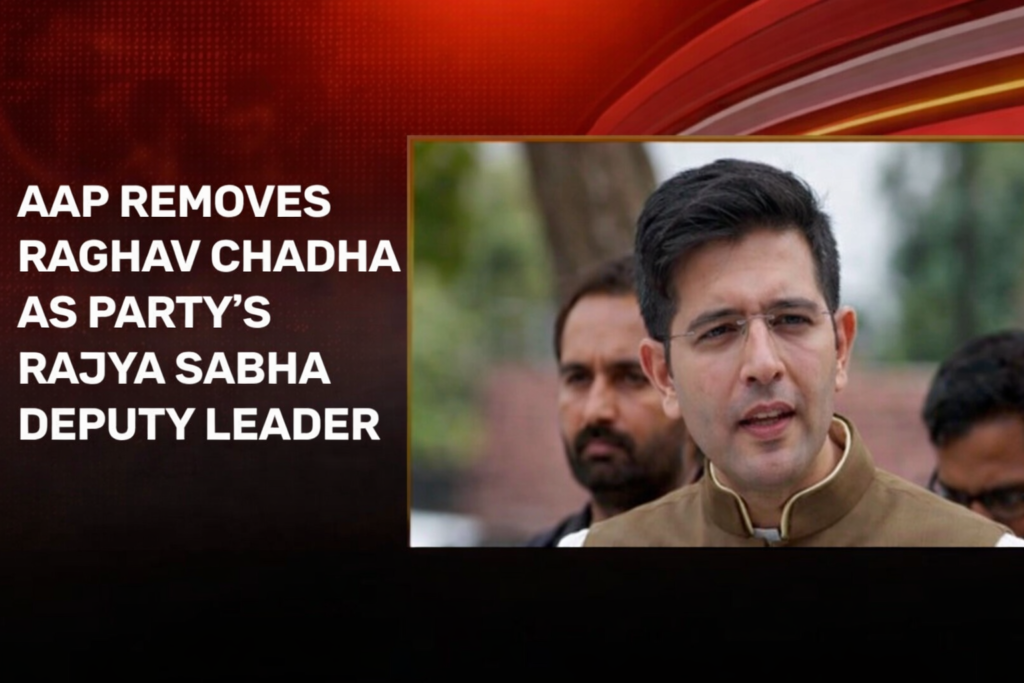
The recent move by the Aam Aadmi Party (AAP) to remove Raghav Chadha as Deputy Leader in the Rajya Sabha has raised more eyebrows than answers. On paper, the party calls it a routine reshuffle, replacing him with Ashok Mittal. But honestly, it doesn’t feel that straightforward.
If you read between the lines, this looks less like a normal change and more like a decision with deeper political signals. Something bigger seems to be unfolding behind the scenes.
A Leader Who Spoke the People’s Language
Raghav Chadha started standing out for a different reason altogether. While most leaders stick to party lines and political attacks, he shifted focus to what actually affects people every day—rising food prices, expensive airports, traffic mess, gig workers’ struggles, even basic issues like menstrual hygiene.
These aren’t flashy topics meant for headlines. These are the problems people deal with daily.
And that’s exactly why people began relating to him. He didn’t come across like a typical politician. He sounded more like someone who understood middle-class life and wasn’t afraid to talk about it openly. In a space full of scripted speeches, his voice felt real and grounded.
But here’s the reality—politics doesn’t always reward leaders who step outside the script.
Out of Sync with the Party Line?
At the same time, Raghav Chadha started looking a bit distant from the party’s main narrative. After AAP’s setback in the Delhi elections, you’d expect a stronger focus on rebuilding and backing the party. But he stayed focused on broader public issues instead.
What stood out even more was his silence during key moments involving leaders like Arvind Kejriwal and Manish Sisodia. No strong statements, no visible defence when it mattered most.
And in politics, silence doesn’t go unnoticed. It often says more than words ever could.
Slowly, a perception began to build—fair or not—that he was drifting away from the party’s core direction.
Discipline Move or Bigger Political Game?
Officially, AAP is calling it a routine reshuffle. And sure, parties do rotate roles now and then.
But taking someone out of a key position like Deputy Leader—and reportedly limiting their voice in the Rajya Sabha—doesn’t feel like just another change. It feels more calculated. More like a message.
Moves like this often signal control. They show that the party wants a tighter grip on how things are said and who says them.
AAP, built around strong central leadership, has always valued alignment—not just in decisions, but in tone and messaging too.
And that’s where things may have started to clash. Raghav Chadha’s rising independent image might not have fit neatly into that structure anymore.
Punjab Angle: Timing or Tension?
You can’t ignore the timing here. With Punjab playing a big role in AAP’s future, the party would want clear messaging and a united front.
Raghav Chadha has strong visibility in Punjab, and that naturally puts him in the spotlight. If there were even small differences in strategy or approach, the leadership might prefer tighter control before things heat up electorally.
So this move may not be about sidelining him. It could simply be about setting the stage, making sure everything stays aligned ahead of crucial political battles.
What This Move Really Signals
Raghav Chadha’s removal doesn’t make him irrelevant—if anything, it puts him more in the spotlight. Leaders who connect with people beyond party politics often build a stronger, more personal support base.
But inside a party setup, that same strength can turn into a challenge.
For AAP, this decision hints at a clear shift—towards tighter control, sharper messaging, and possibly a more centralised approach as elections get closer.
For Chadha, this feels like a turning point. What he does next matters. Does he fall back in line with the party, or continue building his own political identity? That choice will shape his future.
The Bigger Question
In politics, it’s not just about what you say—it’s about how closely it matches the party line.
Raghav Chadha chose to speak about everyday issues, the kind most people actually deal with. That’s what made him stand out.
But now the real question is bigger than just one leader—does Indian politics really have space for voices like that within strict party structures, or do they eventually get pushed to the sidelines?
About the Author