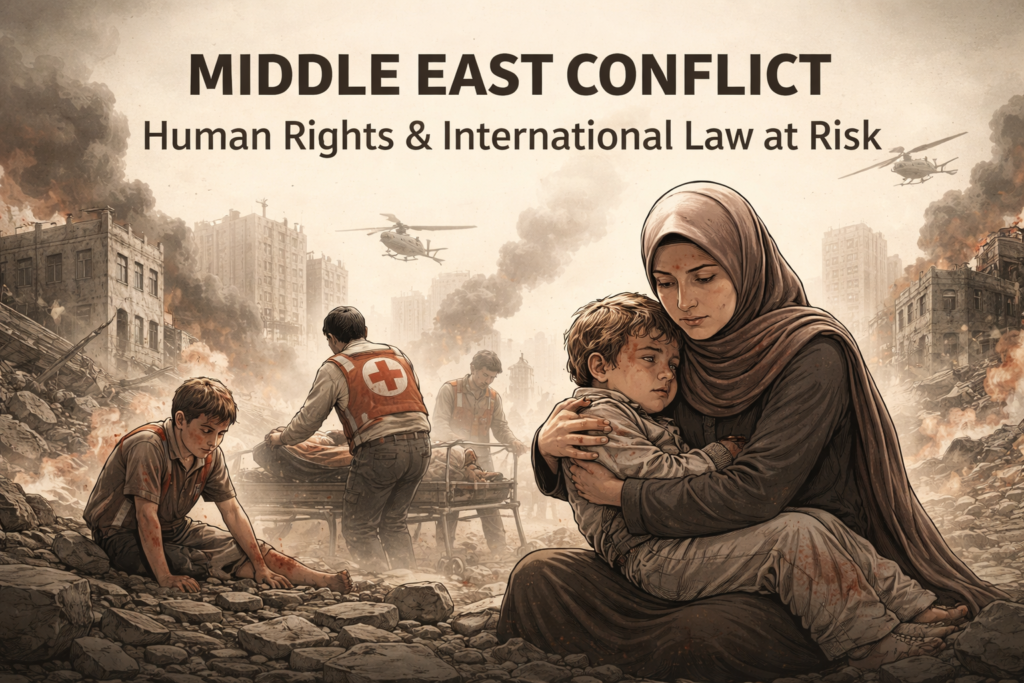
The Middle East stands on the brink once again. Violence is rising, tensions are spreading, and more countries are getting pulled in. But beyond the headlines and political moves, it’s ordinary people who suffer the most.
Families lose their homes. Children lose their sense of safety. Communities break apart. In moments like these, one question becomes impossible to ignore: do human rights and international law still matter during war, or are they being quietly pushed aside?
Civilians Are Bearing the Brunt
As the conflict grows, civilians face the harshest reality. Bombed neighborhoods, damaged hospitals, and unsafe schools have become part of daily life.
In one tragic incident, an attack on a school killed several children. Events like this don’t just cause grief—they shake our basic sense of humanity.
The rules of war are clear. Civilians must never become targets. Armies must always separate military goals from innocent lives. Yet, repeated attacks on civilian areas show that these rules are not being followed. This raises serious legal and moral concerns.
Why the Laws of War Still Matter
War creates chaos, but it doesn’t remove responsibility. International humanitarian law exists to limit damage and protect those who are not fighting.
Frameworks like the Geneva Conventions set clear standards. They focus on three key principles:
- Distinction – Always tell the difference between civilians and combatants
- Proportionality – Avoid attacks that cause excessive harm to civilians
- Precaution – Take every possible step to protect innocent lives
When forces ignore these principles, the consequences go beyond destruction. Such actions can amount to serious violations, including war crimes.
Human Rights Don’t Disappear in War
Even during conflict, basic human rights remain in place. People still have the right to life, dignity, and freedom of expression.
However, reality often tells a different story. Authorities impose internet shutdowns, restrict movement, and control the flow of information. These actions limit what people can see, say, and share—especially when they need it most.
Detainees face even greater risks. Weak oversight creates space for abuse, unlawful detention, and mistreatment. When accountability weakens, vulnerable people lose their protection.
A Test for the World
This conflict goes beyond one region. It tests the global system built to maintain peace and justice.
After World War II, nations came together to create rules that could prevent such suffering. These rules only work if countries respect them.
Every nation has a role to play. No country should support actions that break international law. Silence or selective action only weakens the system and encourages future violations.
Power Should Not Override the Law
What we see today is a clear warning. Power without restraint leads to more suffering. Protecting civilians must remain a top priority, no matter how intense the conflict becomes.
Human rights and international law exist for the worst moments, not the easiest ones. If we ignore them now, the damage won’t stay limited to one region. It will spread, threatening peace and justice everywhere.
About the Author