The conflict between the United States, Iran, and Israel has entered a far more dangerous phase. This isn’t just about missiles hitting bases or tensions at borders anymore. The fight has moved to something every country depends on — energy.
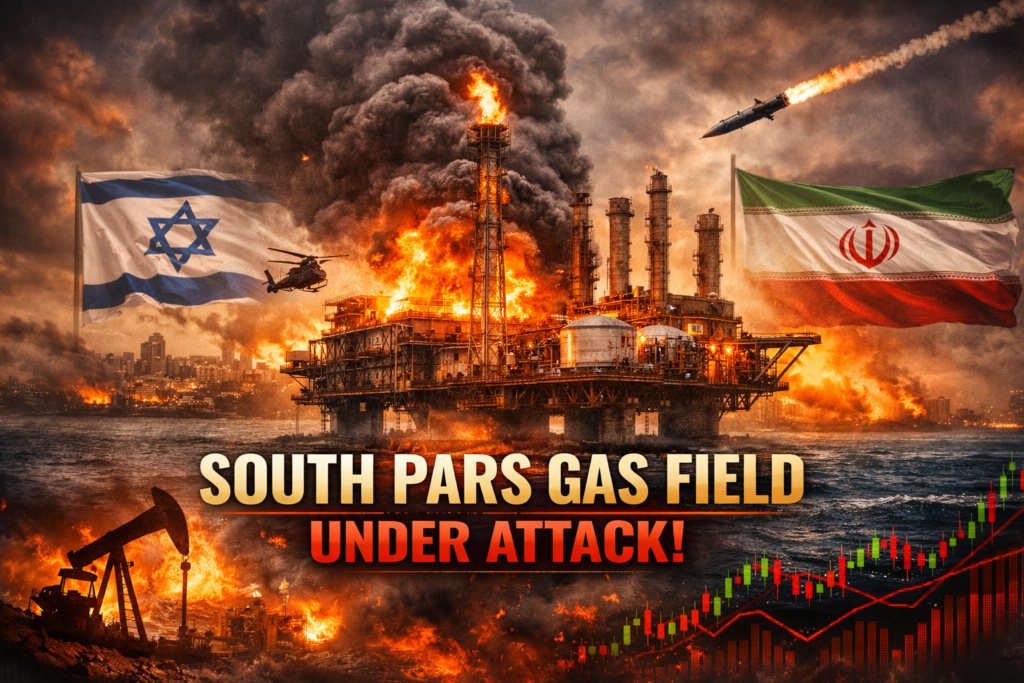
Right at the heart of it is the South Pars Gas Field, one of the largest gas reserves on the planet. What happened there isn’t just another headline. It’s the kind of strike that can shake global energy supplies, disrupt economies, and quietly impact daily life across the world.
So, what really went down?
Israel carried out strikes on facilities tied to Iran’s massive South Pars gas field. This isn’t just any gas field. It’s one of the world’s biggest and is jointly connected with Qatar, making it a key pillar of global gas supply.
Iran didn’t hold back. It hit back by targeting energy infrastructure across the Gulf. Reports point to strikes affecting LNG facilities in Qatar and oil installations in Saudi Arabia, with ripple effects spreading wider.
In a matter of moments, the conflict shifted gears. This wasn’t just about land or military dominance anymore. It became a fight over who controls the energy that powers economies around the world.
Why go after a gas field?
This isn’t random at all. In today’s world, energy is power. Hit the supply, and you hit everything that depends on it.
Here’s what makes it such a strategic target:
- It hits the economy instantly – Industries, transport, electricity… everything feels the shock within hours.
- It disrupts global supply chains – Gas shortages don’t stay local. They ripple across countries and markets.
- It sends a strong message without full war – You show strength and create pressure, without sending in ground troops.
Put simply, striking a gas field is like cutting off the oxygen supply of an economy. Everything slows down, panic builds, and the impact spreads far beyond the battlefield.
The “Strategic Advantages” — Why These Strikes Matter
These attacks are destructive, no doubt. But from a tactical point of view, they give the attacker some serious leverage.
1. Hitting the Economy Where It Hurts
Damaging a major gas field cuts straight into a country’s income. For a nation like Iran, where energy exports are a big deal, even a short disruption can shake financial stability.
2. Turning Global Markets into Pressure Points
Energy markets react instantly. A sudden spike in gas prices doesn’t just stay local. It creates pressure worldwide, pulling other countries into the situation whether they want to be involved or not.
3. Creating Fear Beyond the Battlefield
Striking such a critical asset sends a loud message: nothing is out of reach. It rattles investors, shakes confidence, and spreads uncertainty far beyond the conflict zone.
4. Escalation Without Boots on the Ground
This is a way to raise the stakes without sending troops in. Even Donald Trump has signaled reluctance toward direct military deployment, which makes these kinds of strikes a powerful alternative.
The Hidden Costs — And Why This Could Backfire
What often gets missed is the fallout. And it’s not small. Once energy infrastructure is hit, the damage spreads far beyond one country.
1. A Global Energy Shock Waiting to Happen
The South Pars Gas Field isn’t just important to Iran. It feeds into global supply. Any disruption here can push prices up and tighten availability, especially for regions like Europe and Asia.
2. A Cycle That’s Hard to Stop
Iran has already warned of serious consequences. One strike leads to another, then another. That back-and-forth can quickly spiral into something much bigger than anyone planned.
3. Ordinary People Take the Hit First
Energy isn’t just numbers on a chart. It powers homes, hospitals, transport, everything. When it’s disrupted, it’s everyday people who feel the impact before anyone else.
4. Diplomacy Gets Messier
Countries like Qatar and Saudi Arabia get pulled into the pressure. That makes negotiations harder and increases the risk of more nations getting dragged into the conflict.
About the Author