When Democracy Starts Looking Like a Spectacle
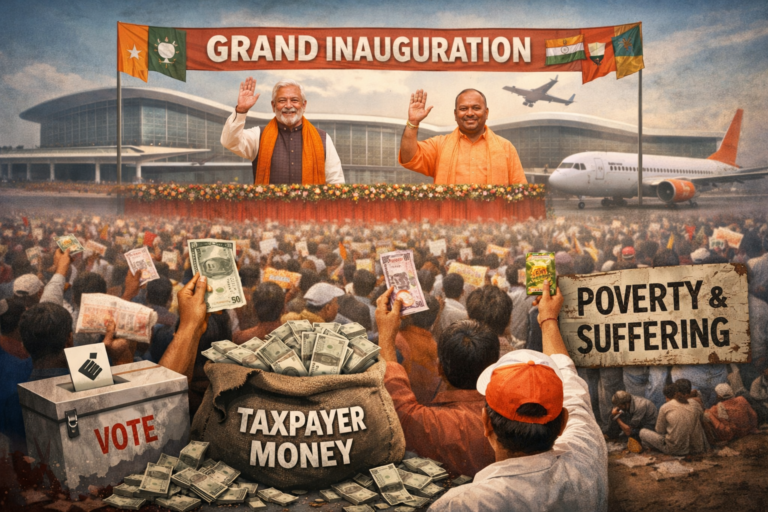
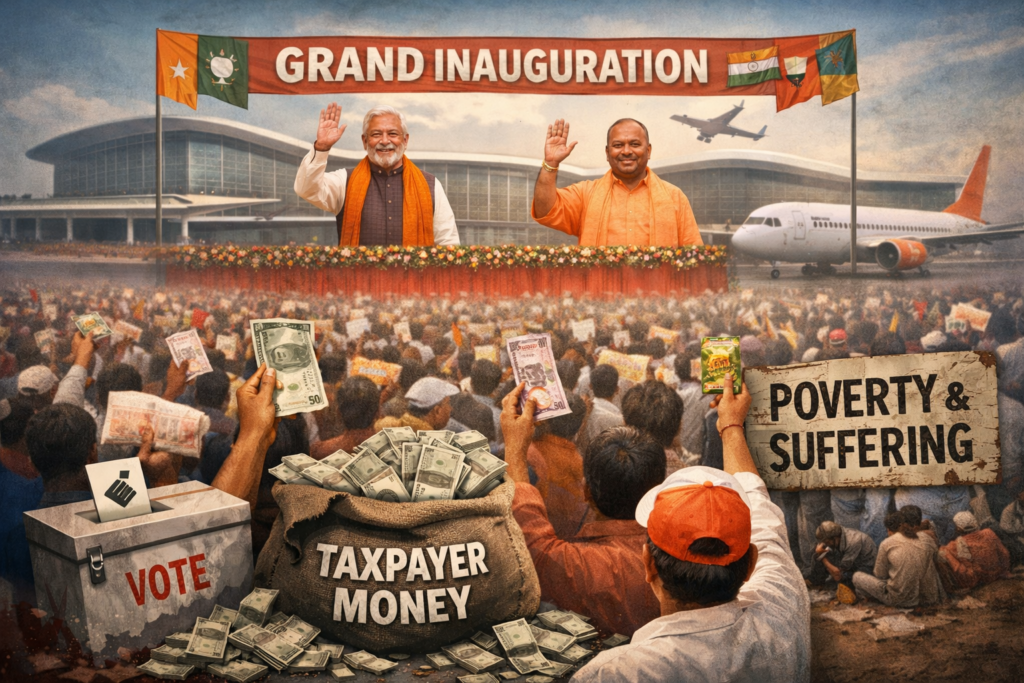
In a healthy democracy, public events are meant to inform, inspire, and connect leaders with people. But sometimes, they start to feel more like staged performances than genuine public engagement. Recent scenes around large political gatherings, including high-profile inaugurations, raise an uncomfortable question — are people participating out of interest, or are they being pulled in through incentives and pressure?
The Economics of “Managed” Crowds
There have been repeated reports and observations across different states where crowds at political events are not entirely organic. People are offered small amounts of money, travel arrangements, or basic incentives like food packets to attend. In some cases, students are encouraged or indirectly pushed by institutions to be present, sometimes with the promise of attendance or internal benefits.
On the surface, this may look harmless — after all, people are getting something in return for their time. But look deeper, and it raises a serious concern. Where is this money coming from?
In many cases, the funds used for logistics, mobilization, and crowd management are directly or indirectly linked to public resources. That means taxpayer money — money meant for development, welfare, education, and infrastructure — is being diverted, even partially, to create a political image.
The Hidden Cost Paid by the Public
For the individuals attending, especially those from economically weaker backgrounds, the decision isn’t always voluntary. When someone spends an entire day in harsh conditions just for a small payment or a packet of food, it reflects something deeper — economic compulsion.
This is where the real issue lies. It’s not just about political strategy. It’s about inequality.
If people were financially secure, educated, and empowered, they wouldn’t need to spend hours in the heat for such small incentives. The existence of such crowds highlights the ongoing struggle with poverty and lack of opportunities.
The Role of Institutions and Pressure
Another worrying aspect is the involvement of local networks — colleges, community leaders, and party workers. When students are asked to attend events in exchange for attendance or subtle academic pressure, it crosses a line.
Education spaces are meant to build independent thinking, not serve as channels for political mobilization. When institutions become tools for gathering crowds, it weakens both education and democracy.
Not About One Party — A Systemic Issue
It’s important to be clear: this is not about a single political party, leader, or state. This pattern has existed across regions and governments over time. The methods may differ, but the core idea remains the same — create a visible show of support, even if it isn’t entirely genuine.
This makes it a systemic issue, not a partisan one.
The Illusion vs Reality
Large crowds create powerful visuals. They send a message of popularity and mass support. But if those crowds are built on incentives, pressure, or compulsion, the image becomes misleading.
Democracy depends on informed choice, not manufactured perception.
What Needs to Change
- The responsibility doesn’t lie only with political parties. It also lies with citizens, institutions, and systems.
- Awareness about rights and responsibilities must grow
- Public spending must be more transparent and accountable
- Educational institutions must remain politically neutral
- Citizens need to question and understand how public money is being used
A Closing Reality Check
When people stand in long lines under the sun for a few hundred rupees or a meal, it’s not just a political story — it’s a social one. It reflects the gaps that still exist in our system.
The real strength of a nation isn’t in the size of its crowds, but in the dignity and independence of its people.
Until that becomes the focus, the line between governance and performance will remain blurred.
About the Author