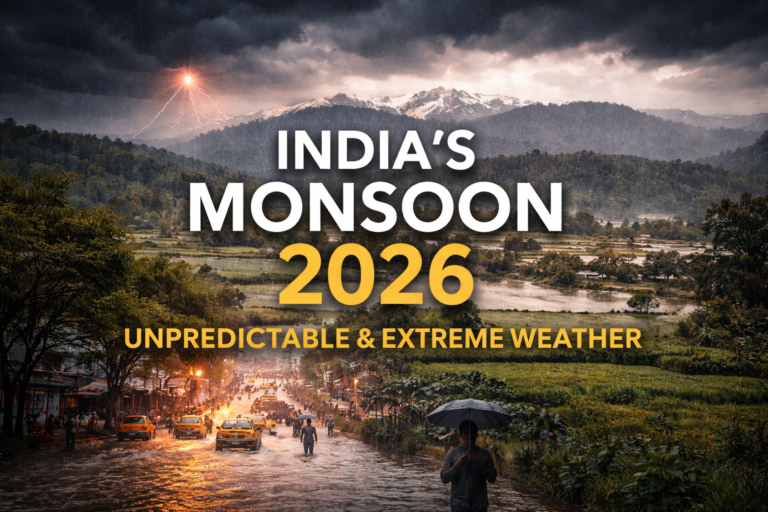
Something about this year’s weather doesn’t feel right.
Even before the monsoon has fully settled in, parts of India have already seen intense heatwaves, sudden unseasonal rain, and sharp weather swings within days. Some regions got early showers. Others are still waiting.
It’s not just about how much it rains anymore. It’s about how unpredictable everything has become.
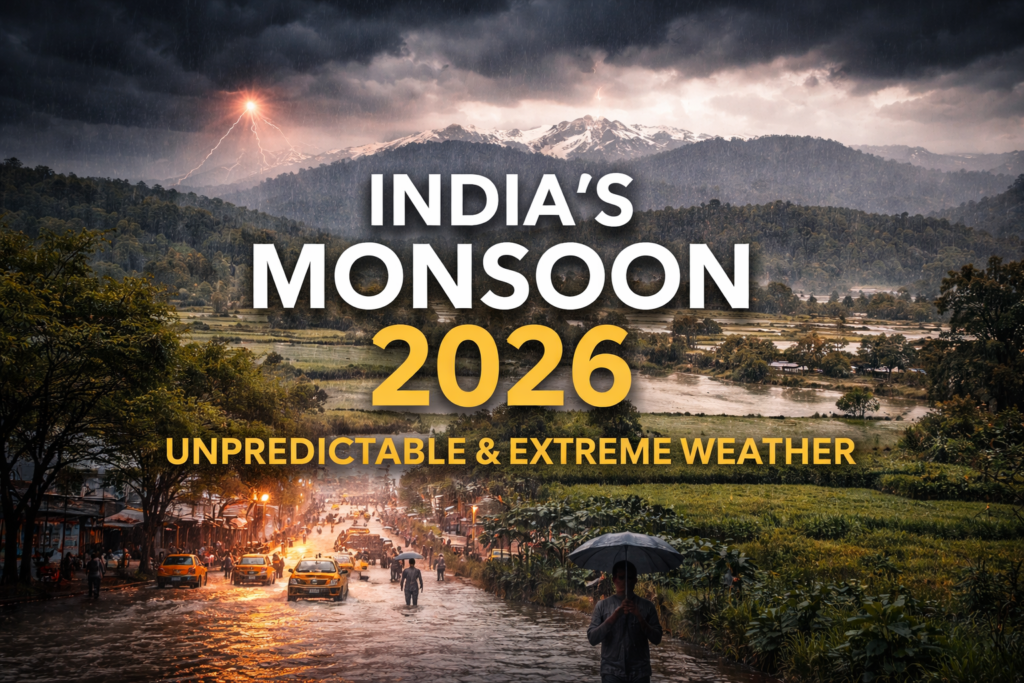
A Season That’s Losing Its Timing
For years, the monsoon followed a rhythm people could count on.
It would build slowly, arrive around June, and spread steadily across the country. Farmers planned around it. Cities adjusted to it. Life moved with it.
But in 2026, that timing already feels off.
Pre-monsoon activity has been uneven. Some regions saw early rainfall bursts, while others continued facing dry and hot conditions much longer than expected.
Instead of a gradual transition, the shift from summer to monsoon now feels abrupt and inconsistent.
From Heatwaves to Sudden Downpours
One of the clearest signs this year is the contrast.
Just weeks ago, large parts of India were dealing with intense heatwaves. Temperatures stayed high for longer stretches, pushing water demand and energy use to extreme levels.
Then suddenly, in some places, heavy rain arrived in short bursts.
Not steady rainfall. Not spread out over days. Just intense, quick downpours.
This pattern is becoming more common — long dry spells followed by sudden, heavy rain that the ground and infrastructure struggle to handle.
Cities Are Feeling It First
Urban areas are showing the impact early in 2026.
Even short periods of heavy rain have started causing waterlogging, traffic disruption, and stress on drainage systems. Cities aren’t built for sudden spikes in rainfall.
At the same time, heat is becoming harder to escape. Concrete structures trap warmth, making cities hotter than surrounding areas.
This mix of trapped heat and sudden rainfall is making urban weather more extreme and less predictable.
What’s Changing Behind the Scenes
The bigger shift is happening in the atmosphere.
Rising global temperatures are allowing the air to hold more moisture. That means when it rains, it has the potential to fall more intensely.
But that moisture doesn’t always get released evenly.
In 2026, this imbalance is already visible. Some areas are seeing early signs of heavy rainfall activity, while others remain unusually dry.
Global climate patterns are also playing a role. Changes in ocean temperatures are influencing how and when the monsoon develops, adding another layer of uncertainty.
Nature’s Balance Is Weakening
There are also local reasons behind this instability.
Deforestation continues to reduce natural climate control systems. Forests once helped regulate temperature and rainfall patterns. Without them, weather becomes more erratic.
Urban expansion is making things worse. Cities are growing faster than they can adapt, creating heat islands that distort local weather behavior.
Pollution is another factor. It affects how sunlight interacts with the atmosphere, subtly changing cloud formation and rainfall patterns.
What 2026 Is Telling Us
This year hasn’t just brought unusual weather. It’s showing a pattern.
Longer heatwaves. Irregular rainfall. Sudden shifts instead of gradual changes.
The monsoon hasn’t even fully unfolded yet, and it already feels less predictable than before.
That’s the real concern.
What Needs to Change
This isn’t just about one season.
If these patterns continue, they will affect agriculture, water supply, urban living, and overall stability.
Solutions exist, but they need attention.
Stronger infrastructure, better urban planning, and protection of natural ecosystems are essential. At the same time, reducing emissions and making sustainable choices can help slow down long-term damage.
Conclusion: A Season We Can No Longer Read Easily
The monsoon used to feel familiar.
You knew when it would come. You knew what to expect.
In 2026, that confidence is fading.
The signals are mixed. The patterns are shifting. And the predictability that people once relied on is slowly disappearing.
The question is no longer whether the monsoon is changing.
It’s how far that change will go — and how ready we are to deal with it.
About the Author